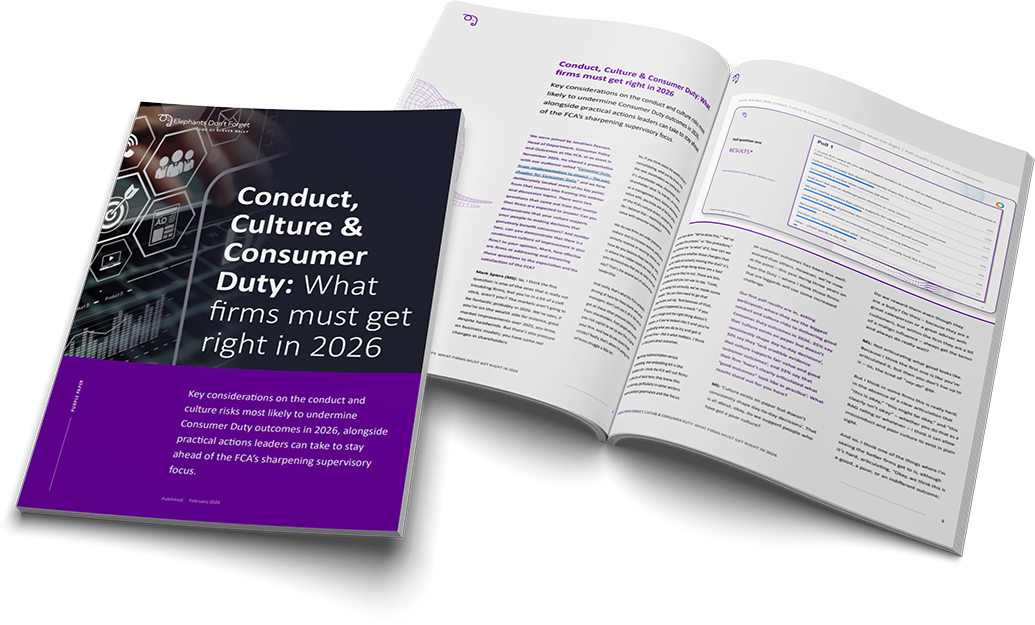
Key considerations on the conduct and culture risks most likely to undermine Consumer Duty outcomes in 2026, alongside practical actions leaders can take to stay ahead of the FCA’s sharpening supervisory focus.
Since the Consumer Duty came into force, the FCA has consistently reiterated that it sets a higher standard of care across financial services – and culture is what makes that standard real in day-to-day decisions.
In 2026, the regulator has signalled a shift in the way they will evaluate Duty adherence: going beyond just assessing whether firms are compliant and, instead, demanding further demonstrable evidence of culture change, outcomes, and Duty impact in practice.
Firms can be expected to answer questions including: “Can you demonstrate your culture supports your people in making decisions that genuinely benefit consumers?” and “Can you demonstrate that there is a continuous culture of improvement in your firm?”
Our recent engagement with the industry found that just 8% of firms said they could clearly evidence how their culture drives decision-making and customer outcomes in practice, with additional research finding that embedding the Duty is still a challenge.
Yet the barriers to aligning and correlating culture to Duty impact also run deeper, with firms citing issues of not fully articulating what good outcomes look like, leadership not consistently reinforcing the Duty, and a lack of accountability when outcomes fall short.
In this discussion guide, we examine:
- What firms consider the biggest conduct and culture risks to delivering good Consumer Duty outcomes to be in 2026.
- Positive examples of the Duty in action cited by the FCA – and how firms can implement them.
- What the FCA’s supervisory lens looks like in 2026.
- Practical actions leaders can take to evidence culture, strengthen challenge, and foster an environment that promotes good outcomes in day-to-day decision-making.