
It’s always good to get a sense check of what your peers are doing in relation to new regulatory change. We recently came across some interesting pieces published by the National Housing Federation regarding the implementation process for the new Competence and Conduct Standard.
In the first piece – ‘Making the Competence and Conduct Standard work for us: our advice for smaller housing associations’ – it was interesting to hear about some of the practical challenges and themes that face smaller landlords.
There is a huge amount of ongoing and significant regulatory change happening in the sector, so it was refreshing to hear Christina Friedenthal, Corporate Services Director at CDS, state that her initial reaction to the introduction of the new standard was one of ‘absorbing’ another requirement that could end up creating processes that added more burden than value.
Potentially – like many of her peers in the sector – Ms Friedenthal said her instinct was to ‘figure out how we could comply as quickly and easily as possible’. Yet, after spending time getting to understand the new standard, the focus switched.
Instead of looking at it as a compliance exercise, it was viewed as an opportunity to really look at how they could improve the way they operate.
This switch in viewpoint is interesting to unpack, as there seems to be a common theme shared amongst landlords that are seeing the opportunity presented by the new standard: they all embrace the ‘spirit’ of it.
In ‘How we’re implementing the Competence and Conduct Standard: Havebury Homes’, Jenny Spoor, Director of Operations, encapsulates this. For them, it’s a ‘continuous process of improvement’; one that is embedded in their learning and development culture.
Preparation has a defined split; colleagues in scope of qualifications hold or are working towards them, but it’s the commitment to invest in their people in role-specific and wider competence development opportunities which really aligns with the spirit of embracing the standard.
Havebury Homes have rolled out bespoke training in areas such as customer service and resident support – training that has been developed from real-life, evidence-based learnings, with a specific outcome in mind: ensuring that their whole organisation has the knowledge, confidence and support needed to deliver services that meet the individual needs of residents.
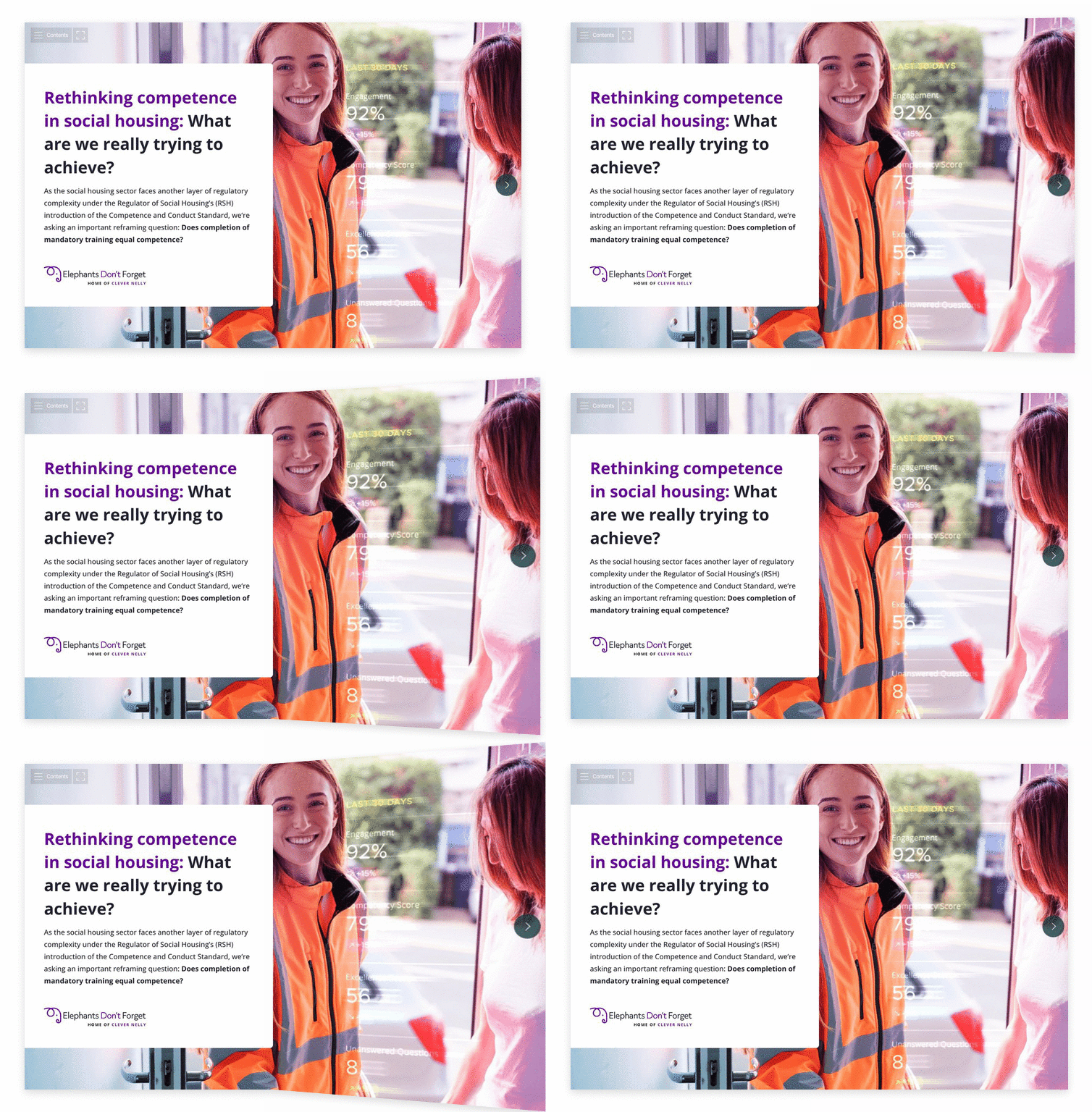
Competence, again, isn’t being viewed as a ‘one-off’ achievement or once-and-done piece of work. This is something we’ve recently unpacked in our latest interactive e-book, which you can access here.
However, one of the main challenges that most landlords face – as Ms Friedenthal states – is that, whilst competence is talked about regularly in the organisation, it’s actually really difficult to clearly define and evidence what it looks like for every role and every individual colleague.
There are a range of challenges in defining competence; landlords may not have documented expectations, it can be difficult to define performance measures, and assessments of competence can often become subjective, meaning managers don’t always have consistent frameworks and data to support meaningful performance conversations. This makes it harder to evidence decisions about colleague competence fairly and clearly.
We’ve spoken to our customers in the sector to understand how they’re using Clever Nelly to overcome these challenges.
There is a significant level of maturity that’s evolving with implementation processes in relation to the new standard; not just in terms of demonstration and evidence, but in how Clever Nelly is being used to assess, improve and optimise employee competence, and how the subsequent data and management information is informing and improving their day-to-day operations and interactions with residents.
Competence is being used as an enabler of improvement across internal and external assurance themes: regulatory standards, TSMs, Health and Safety, and Risk Management, for example.
This continuous improvement drive is fuelled by a deep understanding and recognition that organisational performance is about producing better outcomes and experiences for residents – it isn’t about ticking a regulatory box.
If you look at what often separates a C1 from a C2 judgement, for example, the gap is often defined by the strength of assurance, evidence and organisational controls that are in place. On the contrary, the best-performing landlords aren’t the ones that never experience problems; they are the ones that recognise them early and help their colleagues learn from them to address root causation and prevent continued failures and poor experiences.
‘Acting early’, having a proactive approach to risk management, effective use of data, and a clear focus on tenant outcomes were all fundamental takeaways for landlords to consider from the RSH’s regulatory casework review report 2026.
The regulator made it clear that the most effective landlords are those who understand their risks, act early to address issues, and maintain a culture of openness, accountability and continuous improvement.
It will be interesting to see how these feedback themes feed into assessments of competence and conduct when the new standard comes into force – find out how we’re helping landlords to prepare.
We’re proud to work with leading housing associations, local authorities and property services providers to equip their teams with the knowledge, competence and confidence to deliver optimal resident experiences and outcomes.
Interested to learn more about what we do?
Learn more about Clever Nelly and find out how:
- Our data and management information are helping to give better assurance to management and regulators that staff are competent in their roles.
- It’s supporting organisations to verify and demonstrate that frontline trades staff understand key regulatory topics, such as damp and mould under Awaab’s Law.
- It’s being used to justify strategic training decisions; reducing the need for time-consuming refresher training when it’s not required, giving much-needed time back to frontline services.
- It’s informing managers which employees need practical, on-the-job assessments and appraisals.
- It’s supporting assurance evaluations of property services and maintenance teams in relation to their individual understanding of critical health and safety procedures, such as working at height, lifting and carrying, and working with asbestos.
- It’s providing the business with assurance regarding how internal policies and procedures are being understood.
- It’s improving consistency and support during the induction process, giving managers the data required to create targeted training interventions where needed.
- It’s improving right-first-time processes, reducing service failures that often lead to complaints.
Visit our housing sector page and get in touch to see Clever Nelly in action.